
An SME client that does not renew its MSP contract rarely makes that decision on the day it cancels. The departure announces itself months earlier: fewer tickets from the people who matter, a managing director who skips the quarterly review, a question about the notice period, a new IT manager who wants to take control. The ScalePad 2026 MSP Trends Report shows that four in ten MSPs lose more than 5 per cent of their clients each year and that a high satisfaction score barely predicts who stays. Kaseya finds that 82 per cent of MSPs win new clients wholly or partly from competitors, so every client who leaves you is someone else’s gain. SMEs cite price, having outgrown their MSP, bringing IT back in-house and a poor experience with the account team as the reasons they want to leave. Which signals in the ticketing system, in the relationship and in the administration point to a client on its way out? Why do CSAT scores help so little, and how do you turn recognising those signals into a fixed routine?
In this article: How many clients actually leave? | Why do clients leave an MSP? | Signals in the ticketing system | Signals in the relationship | Why does your satisfaction score tell you so little? | From gut feeling to fixed routine
For many MSPs, cancellations come as a surprise. Wasn’t the client happy? There were no major incidents open, and the last invoice was paid as usual. And then an email arrives announcing that the contract will end on its expiry date, often neatly wrapped in a compliment about the partnership. If you then go back through the ticket history and the calendar for the past six months, you can usually see where things went wrong. The trick is to see it in advance, at a point when a conversation can still make a difference.
How many clients actually leave?
Reliable churn figures for the Dutch MSP market do not exist, and most MSPs do not track them systematically for themselves either. In the ScalePad 2026 MSP Trends Report, a survey of more than 1,100 North American MSPs conducted in November 2025, only 35 per cent say they track churn as a key metric. The distribution ScalePad records is nonetheless useful as a benchmark: 11 per cent of MSPs say they lose no clients at all, 45 per cent lose between 1 and 5 per cent a year, 27 per cent between 6 and 10 per cent, and 15 per cent lose more than one in ten clients annually. For 26 per cent of MSPs, client churn is the biggest brake on growth. ITSM vendor Xurrent works with an average of 12 per cent a year; that figure circulates widely in the sector, although the evidence behind it is thin.
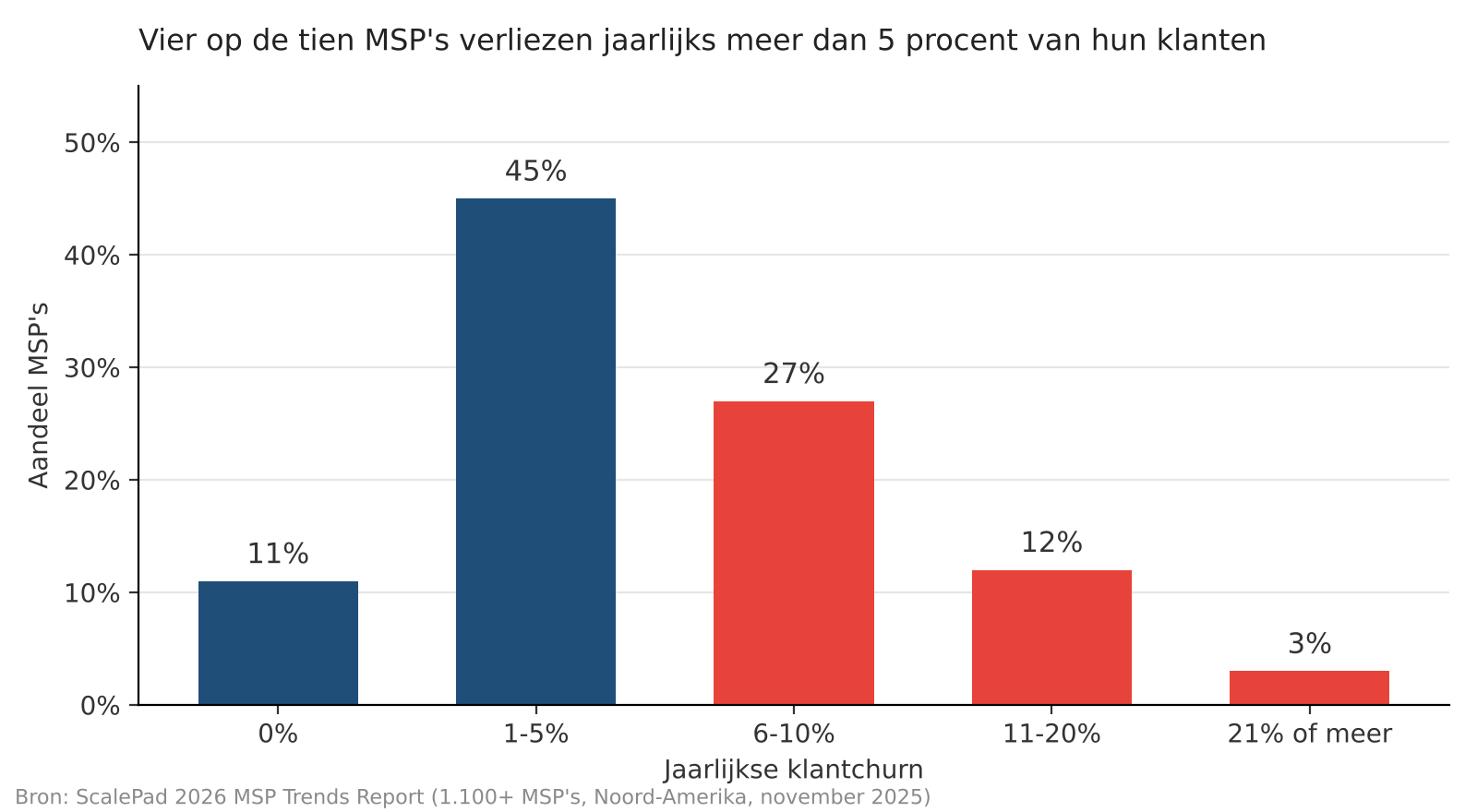
Figure 1. More than four in ten MSPs lose over 5 per cent of their clients each year. Source: ScalePad 2026 MSP Trends Report.
Those percentages only carry weight when set against what a new client costs. For the 2026 State of the MSP Report, Kaseya asked 1,061 MSPs about their biggest concern, and 71 per cent put winning new clients at the top, well ahead of cybersecurity (53 per cent) and revenue growth (49 per cent). The share of MSPs struggling to demonstrate value quickly to prospects almost doubled, from 10 to 19 per cent. And the new clients who do come in are signing for less: according to Kaseya, the share of clients spending more than $25,000 a year fell from 75 to 41 per cent. In that market, retaining an existing client is cheaper than finding a replacement, which makes spotting departures in time a core commercial task.
Why do clients leave an MSP?
The best source on motives is the client itself. Twice a year, JumpCloud asks IT decision-makers at SMEs in the US and the UK about their relationship with their MSP. In the third-quarter 2024 edition, businesses that had recently stopped working with their MSP cited four main reasons, closely grouped: the MSP had become too expensive (28 per cent), they had outgrown the MSP’s offering (26 per cent), they had brought IT fully back in-house (24 per cent) and they had had a poor experience with the service or the account team (23 per cent). These were followed by an MSP offering more than was needed (21 per cent), an MSP that no longer supports the products they want (18 per cent) and the feeling of being too small to be taken seriously (16 per cent).
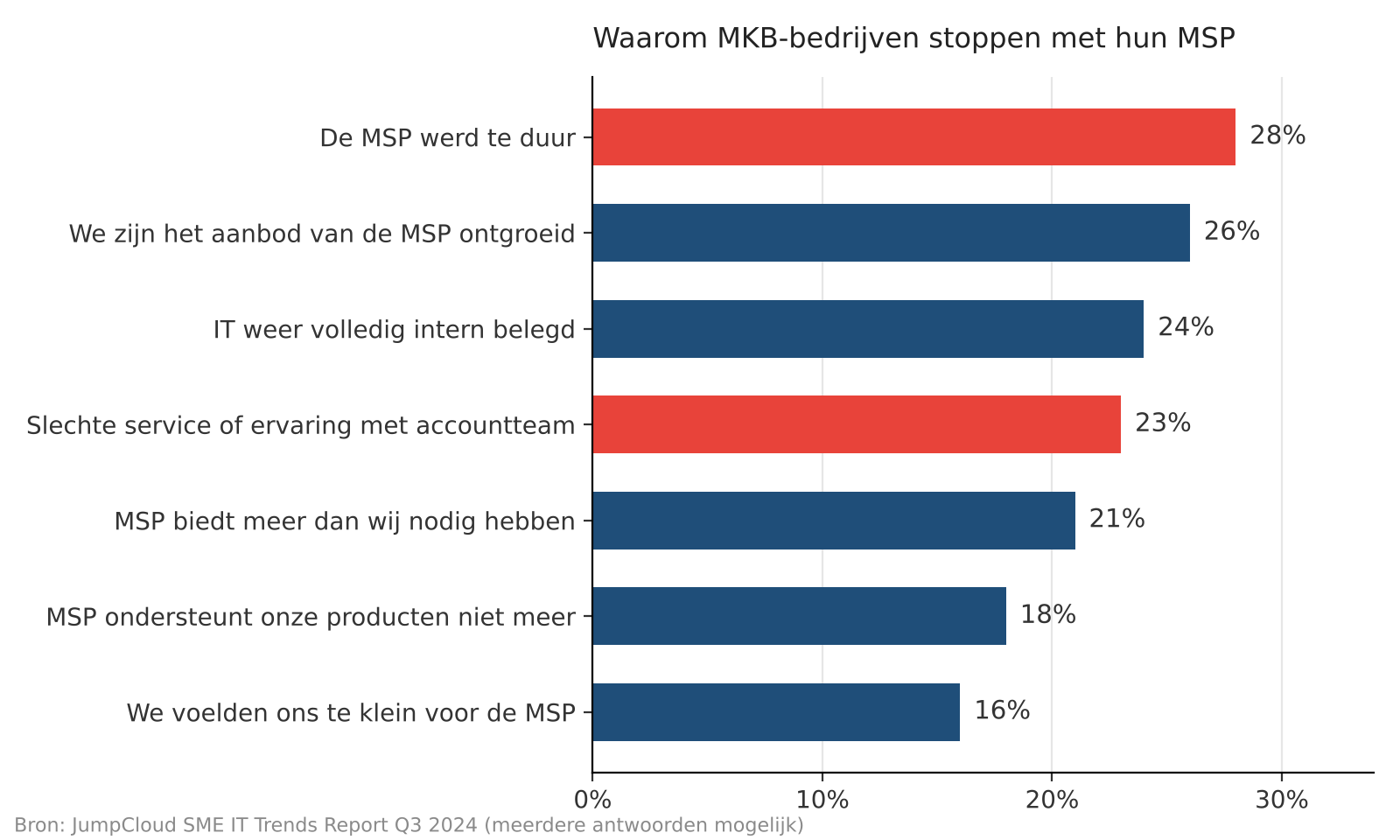
Figure 2. Price, growth, control and how clients are treated outweigh technology when an SME client leaves. Source: JumpCloud SME IT Trends Report Q3 2024.
What stands out is how few of those reasons concern technology. Price, growth, control and how clients are treated drive departures; an outage is at most the trigger for acting on a decision that has been simmering. The same picture emerges from the Dutch market, albeit among larger organisations. In the 2026 Dutch IT Sourcing Study by Whitelane Research and Eraneos, based on more than 350 large IT-buying organisations, 45 per cent cite a lack of challenge as their IT service provider’s biggest weakness and 30 per cent say the provider lacks an understanding of their business. The share of organisations wanting to outsource less rose from 20 to 26 per cent, compared with 12 to 13 per cent five years ago, with knowledge retention as the main motive. That insourcing trend is trickling down to SMEs: the first in-house IT manager at a client with 80 workstations is a classic moment for the MSP contract to come under scrutiny.
Signals in the ticketing system
The ticketing system is the first place where a departure becomes visible, often in a counter-intuitive way. A falling ticket volume is rarely good news. A client that gives up on logging issues is seeking help elsewhere: from a colleague, a vendor or a competitor that is already watching. Pay particular attention to who stops logging tickets. If the office manager or the managing director no longer calls and only staff are still submitting tickets, the decision-maker has already checked out.
The second signal is the content of the tickets. Questions about products outside your standard stack, such as a different CRM, an AI tool or a new accounting package, indicate that the client wants to go beyond what you offer. The 18 per cent ‘no longer supports our products’ and the 26 per cent ‘outgrown’ from the JumpCloud research start here. Requests that you turn down or push aside as ‘out of scope’ also deserve a note. A client that hears no three times will look for a solution elsewhere.
The third signal lies in resolution times and escalations. ScalePad finds that MSPs with high churn more often cite slow response times, security incidents and poor knowledge of the client environment as obstacles to satisfaction. A client that has to chase an open ticket twice in a quarter is building a case file. That file will land on the table at contract renewal, even if the client says nothing about it at the time.
Signals in the relationship
Outside the ticketing system, the signals are softer and more often missed. The periodic business review is the most important barometer. According to ScalePad, 49 per cent of MSPs hold such a review quarterly and 23 per cent monthly, and at 45 per cent the client’s senior management usually attends. If that managing director suddenly sends a stand-in, reschedules the meeting twice or stays only for the first ten minutes, that carries more weight than any score. ScalePad points to a double effect: the MSPs with the highest churn actually speak to their clients’ senior management often. A managing director who sits at the table without being shown any business value decides faster than one you never speak to.
The second relationship signal is staff turnover at the client. A new finance director, a new operations manager or the first in-house IT person brings their own network and often their own preferred supplier. Someone like that starts by reviewing all the contracts, including yours. The JumpCloud reason ‘brought IT back in-house’ (24 per cent) almost always starts with a new name on the client’s payroll.
Then there is the category of contract questions. A client asking about the end date, the notice period, the exact licence numbers or a breakdown of hours is doing the maths. The same applies to a request for a lower service tier, fewer workstations in the contract or an explanation of the latest price increase. The question may look innocent, but the implications are real. Invoices paid later than before, or suddenly disputed, belong on the same list. The most treacherous variant is silence: a client that no longer responds to anything, does not want a roadmap meeting and unsubscribes from the newsletter has usually already made its decision.
Why does your satisfaction score tell you so little?
Many MSPs rely on the CSAT score attached to tickets as proof that all is well. ScalePad adds a firm caveat. MSPs with the highest CSAT scores report, more often than average, either virtually no churn or above-average churn. The explanation is simple: CSAT measures how the employee who submitted the ticket experienced its handling, while the decision to cancel is made in the boardroom, by people who rarely submit a ticket and certainly do not fill in surveys. An MSP can score 4.8 among users and still lose the contract with the owner who feels he is paying too much.
Measuring still makes sense, provided you measure the right people. In research among MSPs, Analysys Mason found that companies that systematically track client satisfaction achieve a renewal rate 12 percentage points higher than MSPs that do not. Measuring itself opens the door to conversations. An NPS question to decision-makers, a short annual conversation with the owner outside the review and the honest question of whether he would recommend you to a fellow business owner say more than a thousand thumbs-up from users. ScalePad finds that only 31 per cent of MSPs track NPS, compared with 53 per cent tracking CSAT.
From gut feeling to fixed routine
Most of the signals above are harmless on their own. A client may reschedule a review, pay an invoice a week late and ask a question about the notice period. It is the pattern that counts. That is why, according to ScalePad, MSPs with low churn work with a fixed account management routine: a health score per client that combines ticket volume, resolution times, review attendance, payment behaviour and contract questions, and an agreement on who takes action when that score drops. An MSP with sixty clients can keep track of this in a spreadsheet; a PSA delivers most of the figures ready-made.
The routine matters more than the tooling. ScalePad finds that MSPs with the most effective reviews and the highest satisfaction meet monthly rather than quarterly more often, and that they draw up roadmaps and budgets twelve to twenty-four months ahead. A client with an approved roadmap through to the end of next year rarely switches halfway. The account manager’s role thus shifts from reporter to someone who asks the question the client never gets round to: what happens to IT when you open that second site next year?
Finally, it helps to distinguish between churn you want to prevent and churn you are better off letting go. ScalePad talks about ‘good churn’: clients who do not fit your profile, consistently pay too little for what they ask or dispute the price every month. There, an early signal does not lead to a rescue attempt, but to an orderly parting, with a handover that leaves your reputation intact. In a market where 82 per cent of MSPs win new clients from competitors, the way you let a client go is just as visible as the way you win one.
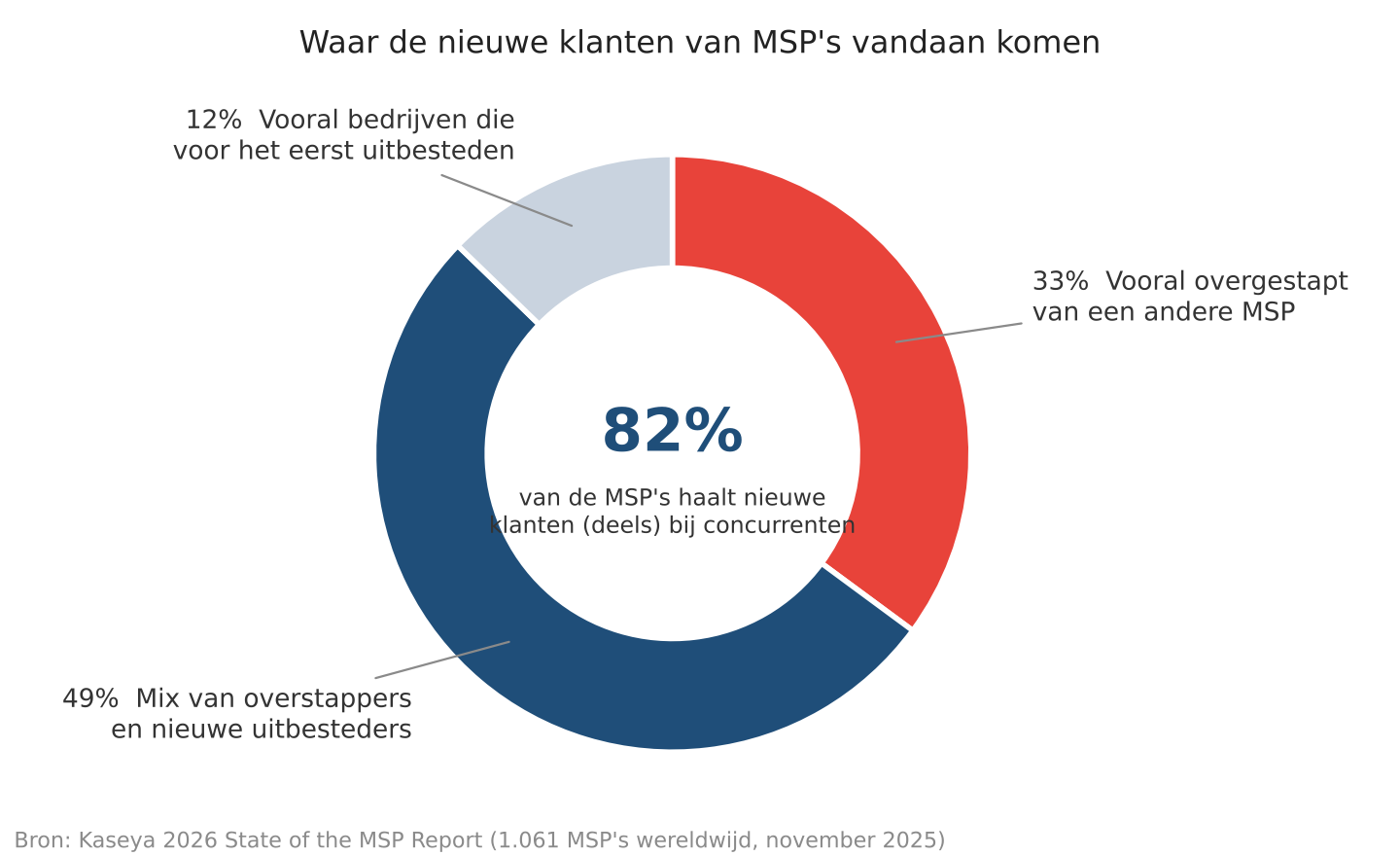
Figure 3. Only 12 per cent of MSPs win their new clients mainly from businesses outsourcing for the first time. Source: Kaseya 2026 State of the MSP Report.
Eight signals that call for a conversation
1. A client’s ticket volume falls without any change in the environment, especially if the decision-makers themselves no longer log issues.
2. Tickets increasingly concern products and requirements outside your standard offering, or you have turned down a request for the second time.
3. The client has to chase open tickets or has escalated twice in a single quarter.
4. The client’s senior management no longer attends the business review, sends a stand-in or repeatedly reschedules the meeting.
5. A new finance director, operations manager or in-house IT person has started.
6. The client asks about the end date, the notice period, licence numbers or a breakdown of hours, or wants a lower tier.
7. Invoices are paid later than before or are suddenly disputed.
8. The client no longer responds to anything: no roadmap meeting, no reply to proposals, newsletter unsubscribed.
One signal is noise. Two within a quarter are a reason to call the owner, outside the review and without an agenda.
Sources ScalePad 2026 MSP Trends Report, Customer Success + Services chapter (November 2025); ScalePad 2026 MSP Trends Report, introduction and methodology; Kaseya 2026 State of the MSP Report (April 2026, pdf); JumpCloud SME IT Trends Q3 2024, special report Your Route To Positive Client Interactions (pdf); Dutch IT Channel, 2026 Dutch IT Sourcing Study highlights best service providers (6 March 2026); Eraneos and Whitelane Research, 2026 Dutch IT Sourcing Study; Analysys Mason, MSP customer satisfaction and retention (January 2019, pdf); Xurrent, The MSP customer retention challenge: combating the 12% annual churn rate (April 2025).
This article was originally published in Dutch on MSP Business. Read the original →