A digital twin is a digital model of a physical system in which you test changes before you implement them. The 3D simulations of power and cooling for AI data centres from NVIDIA and Schneider are someone else’s problem. The network digital twin, however, a computable model of switches, firewalls and routes, is the variant that matters. The problem it solves is a big one: according to the Uptime Institute, 41 per cent of serious network outages stem from configuration and change management errors, and 87 per cent of outages were preventable. Gartner predicts 70 per cent less unplanned downtime for organisations that model changes first, an analyst estimate that vendors are eager to quote. The hype lies in the word (which is now slapped onto every topology map) and in the scale. IP Fabric, Forward Networks and NetBrain are built for organisations with 1,000 employees or more. For the MSP, a twin is useful as its own tool across the entire client base, provided that the first step (configuration backups, diffs and a source of truth) costs nothing in licences, that only clients with multiple sites, multiple vendors and a compliance requirement belong in the model, and that you make a vendor prove the model finds a real error before you sign.
In this article
What does this mean for the MSP?
The term covers two worlds that have little to do with each other. The first is that of NVIDIA, Schneider Electric, Cadence and Siemens, who made the Omniverse DSX Blueprint generally available at GTC in March 2026: a platform for simulating the layout, power topology and thermal behaviour of gigawatt data centres before a spade goes into the ground. Impressive, and according to analyst Dell’Oro also far ahead of practice, where most data centre design still runs on CAD and BIM and the adoption of digital twins is in its infancy. For an MSP serving clients with a server cabinet, a colocation rack or an Azure tenant, this is a nice story about someone else’s problem.
The second world is that of the network digital twin. Gartner describes it as a model of the behaviour of campus, SD-WAN or data centre network components, either as a standalone application or built into a broader management or security platform. The IETF/IRTF has been working on a reference architecture since 2022 and, as of summer 2026, is on the thirteenth version of that document. The core is always the same: the model reads configuration and state from real devices, builds a computable representation of the network from them, and offers a sandbox in which you can replay a change or an outage without any user noticing. This is the variant we want to discuss here.
What problem does this solve?
The problem is old and well documented. In the Uptime Institute’s Annual Outage Analysis 2026, based on a survey of more than 450 operators, configuration and change management errors remain the most frequently cited cause of serious network outages: 41 per cent of affected operators name them, ahead of failures at third-party network providers and hardware failure. Human error plays at least a supporting role in 92 per cent of outages, and 59 per cent of operators with a human error in the chain point to a failure to follow existing procedures. The most uncomfortable figure: 87 per cent of operators that experienced an impactful outage say it could have been prevented with better management, better processes or better configuration. That percentage has been rising for years.
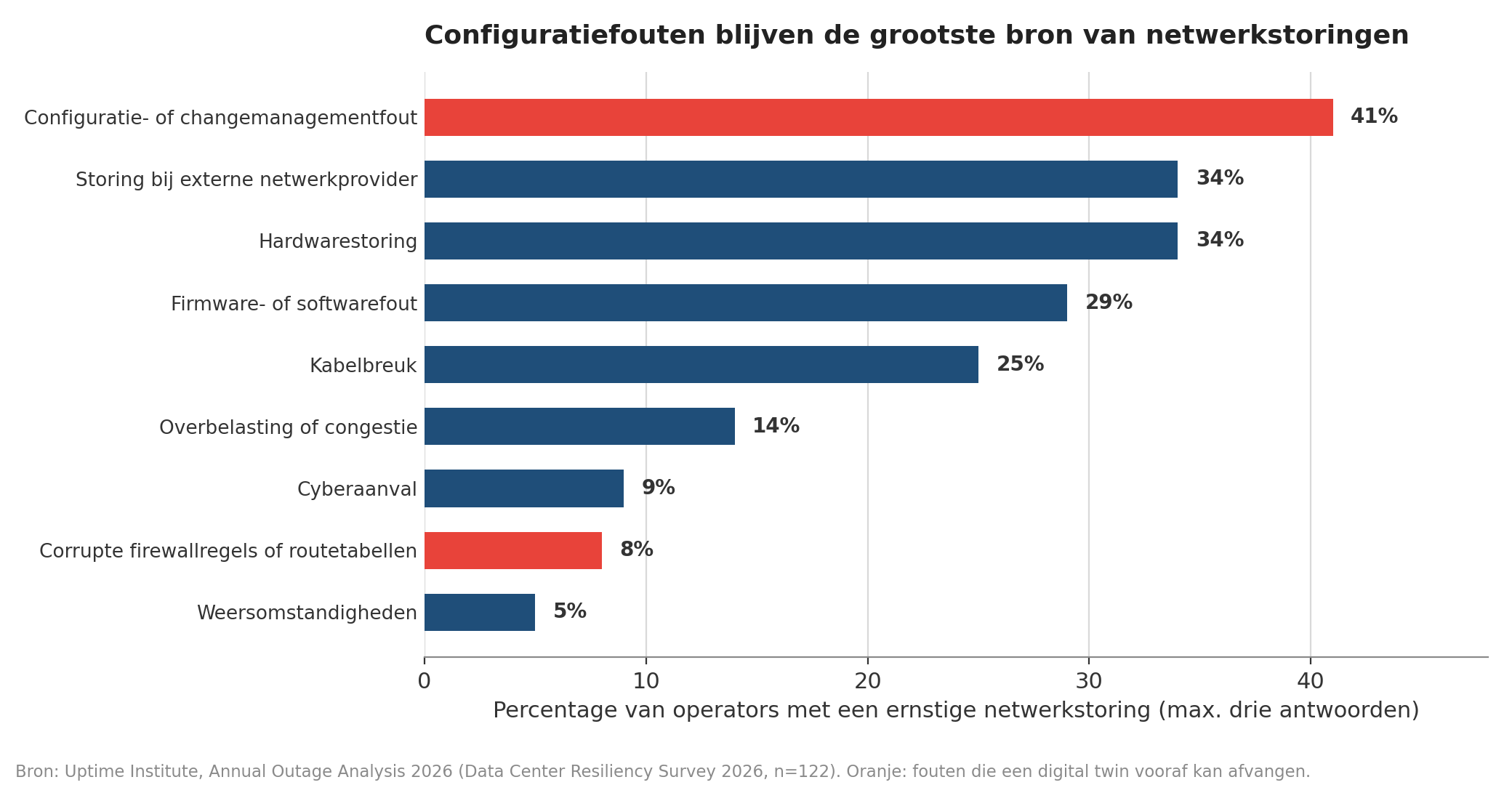
Figure 1: Configuration and change management errors remain the biggest source of serious network outages. Source: Uptime Institute, Annual Outage Analysis 2026.
Uptime also notes a shift in the nature of the errors. Software-defined networking and automation make networks more flexible and quicker to recover, while at the same time increasing the risk of configuration errors and cascades: a single wrong line pushed to a hundred devices by an automation tool. In the report Leverage Network Digital Twins to Increase Agility and Lower Risk (April 2025), Gartner attaches a prediction to this: organisations that first model their configuration changes and firmware updates in a network digital twin will reduce their unplanned downtime by 70 per cent through 2028. That is an analyst prediction, not a measurement, and vendors are eager to quote it. The mechanism behind it is plausible, though: if you have a change calculated first, you catch the error before it goes live.
What does a twin actually do?
It helps to see the twin as a staircase rather than as a single product. At the bottom is static documentation: the Visio diagram and the Excel list that are accurate on the day they are created. Above that is automated discovery, in which an RMM or documentation tool reads the devices and maintains an inventory. Most MSPs are at this level, and that is not a twin. The third step is a snapshot model: configuration and state are captured periodically, so you can compare what changed between yesterday and this morning’s outage. The fourth is path analysis: the model calculates how traffic flows from A to B across all switches, firewalls and cloud connections. The fifth is what-if verification, in which you apply a change in the model and have it check whether the segmentation, routes and firewall rules still hold. At the very top is automated remediation, in which the model itself carries out the change within guardrails.
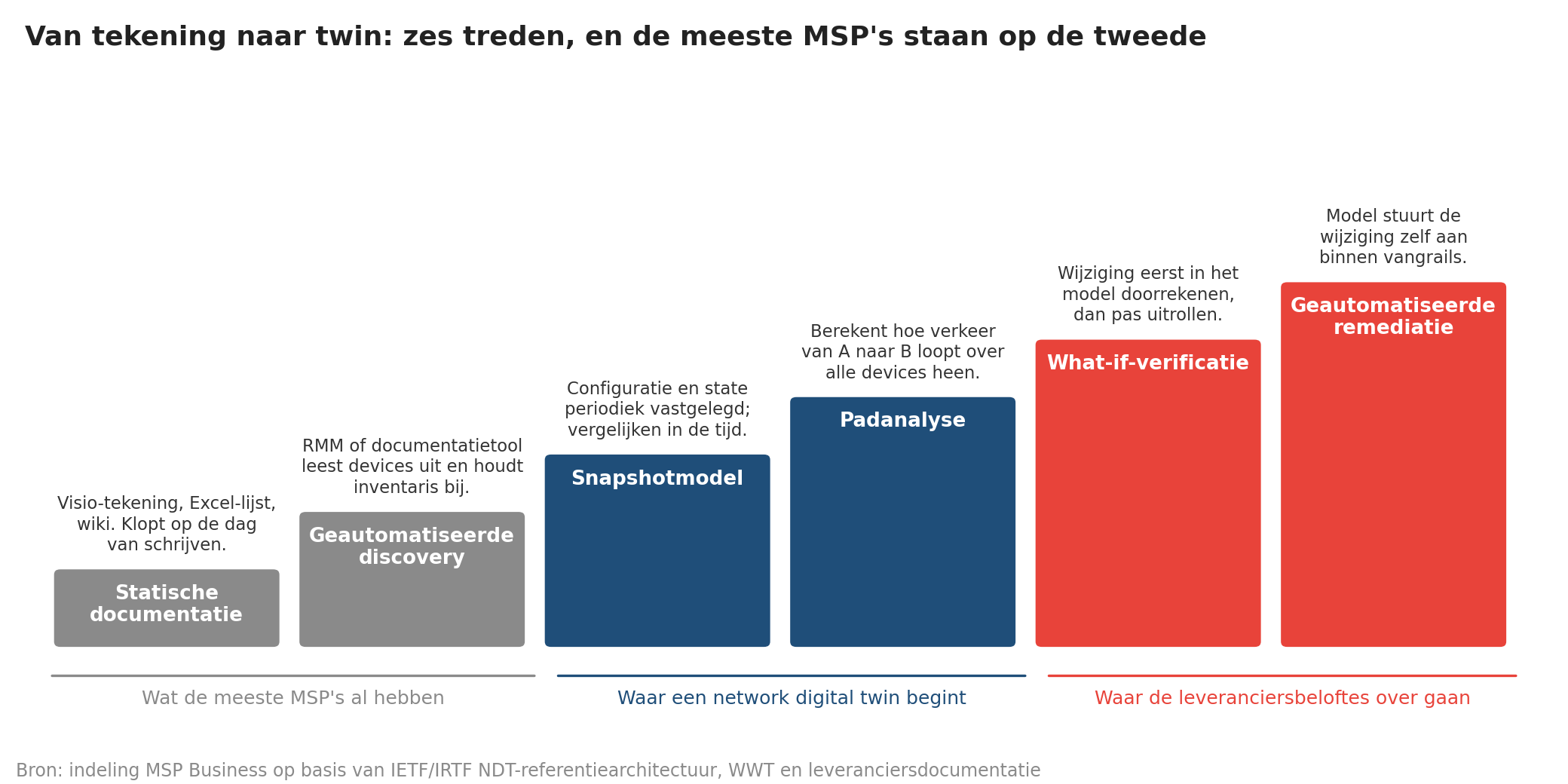
Figure 2: Six steps from documentation to digital twin. Most MSPs are on the second; a twin begins at the third. Source: MSP Business classification.
The three best-known vendors each occupy a different part of that staircase, according to a comparison published by integrator World Wide Technology in January 2026. IP Fabric works with read-only discovery and timed snapshots, ships more than 150 built-in checks and is deliberately not a real-time monitor: the freshness of the model depends on the discovery schedule. Forward Networks builds a mathematical model that calculates all possible paths, making it the strongest at what-if analysis and formal verification of segmentation, but it does not carry out changes itself. NetBrain is closest to day-to-day operations, with dynamic maps, no-code runbooks and protected change workflows, and explicitly names MSPs as a target group. WWT raises the same caveats for all three: the learning curve is steep, the value stands or falls with complete and regular reading of all devices, and a model that is not kept up to date becomes little more than a Visio diagram within a few weeks.
Where is the hype?
The hype lies in the scale at which this is sold and in the word itself. Forward Networks states on its own pricing page that the platform runs at organisations with typically 1,000 employees or more, and charges per modelled device. Its reference customers are Goldman Sachs, PayPal, Vodafone and S&P Global. An SME client with two switches, a firewall and a Meraki dashboard has no network to model; the topology map in the manufacturer’s cloud portal already does what a twin promises. For that client, the digital twin is a solution to a problem it does not have.
But the hype also plays a part. Vendors of monitoring, documentation and network automation now slap the label on anything that draws a topology map. A tool that reads devices and produces a picture is on the second step. A twin begins at the third and only proves itself at the fifth, where a change is calculated first. So if, as an MSP, you receive a quote with the words digital twin in it, the question is: can I test a change in this before I roll it out, and what happens if the answer turns out to be wrong?
Uptime’s investment figures show where the market is moving. In 2026, data centre operators are focusing on automation and control systems more often than in the past three years, while monitoring and analytics, the investment that has delivered the most, is slipping slightly. That is the layer where a twin belongs. It is, however, data centre operators saying this, not SMEs with a server cabinet in the meter cupboard.
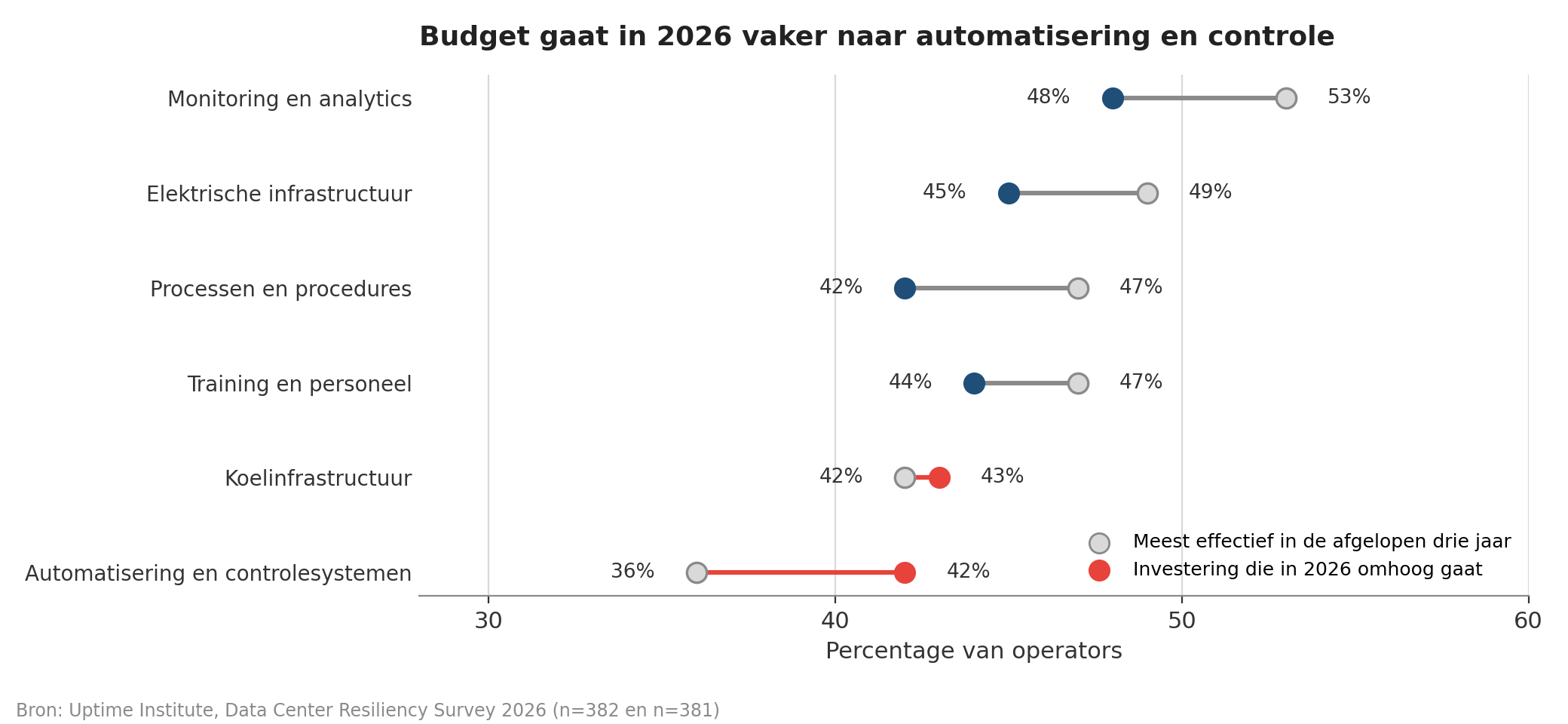
Figure 3: In 2026, data centre operators are focusing more often on automation and control; monitoring remains the investment that has delivered the most. Source: Uptime Institute, Data Center Resiliency Survey 2026.
What does this mean for the MSP?
The honest conclusion is that a network digital twin is useful for an MSP, provided the MSP sees it as its own tool rather than as a per-client product. The scale a twin needs lies with the MSP, not with the client. An MSP with thirty clients, five network vendors in the stack and a few hundred firewalls and switches under management has exactly the multi-vendor, multi-site problem these platforms were built for. A single modelling platform across the entire client base, charged per device, is a different business case from a twin per client. It is also how NetBrain and Forward position their MSP offerings.
The first step costs nothing in licences. The third step of the staircase, the snapshot model, can be reached with existing tooling: automated configuration backups of every switch and firewall, a diff with every change, and a source of truth such as NetBox that holds the desired state. An MSP that does not have this in order need not request a quote, because the model has nothing to read. If that foundation is in place, you can use open-source network emulation such as Containerlab to replicate a client network and run a firmware update or a new firewall policy there first. In June 2026, researchers published a design for such a low-cost twin based on open-source tooling; it is labour-intensive and its reliability is limited by the virtual images the vendor makes available, but it is good enough to catch a faulty ACL.
The second step is selection, because only a minority of clients belong in the model. Those clients have multiple sites, multiple network vendors, a connection to a cloud environment and a compliance requirement. The Cyberbeveiligingswet, the Dutch law implementing NIS2, requires demonstrable change management and proof that segmentation works, and a twin that produces a verification report for every change is a handy answer to that. For the single-site installation contractor, the manufacturer’s topology map remains sufficient.
The third step is the bar you set for the vendor. Ask for a proof of concept on a real client environment, with a real planned change, and see whether the model finds the error the engineer missed. Ask how often the model is refreshed and what happens to devices it cannot read. And ask what the licence does if the client base grows by twenty per cent. A twin with a good answer in that conversation is an instrument that makes the MSP itself more efficient and the client more reliable. A twin that stops at the topology map demo is a documentation tool with an expensive word attached.
The promise of 70 per cent less unplanned downtime is an analyst prediction for enterprises, and the Omniverse simulations of AI factories are a world the MSP merely looks at. What remains is more modest and more useful: a model of the network that calculates a change before it goes live, built at MSP scale, for the clients where a configuration error really hurts. Uptime calculates that 41 per cent of serious network outages stem from such an error. An MSP is more likely to bring that figure down with a good snapshot and a test environment than with a 3D model.
Sources: Uptime Institute, Annual Outage Analysis 2026 (May 2026); Uptime Institute, press release Annual Outage Analysis 2026; Gartner, Leverage Network Digital Twins to Increase Agility and Lower Risk (April 2025), cited by Forward Networks; NetBrain, Named Representative Vendor in Gartner Network Digital Twin Research (May 2025); World Wide Technology, Network Digital Twin Tools Comparison (January 2026); Forward Networks, Pricing; IETF/IRTF, Network Digital Twin (NDT): Concepts and Reference Architecture, draft-irtf-nmrg-network-digital-twin-arch-13 (July 2026); NVIDIA, Omniverse DSX Blueprint and Vera Rubin DSX AI Factory reference design (March 2026); Dell’Oro Group, GTC 2026: Moving from Chip Launches to Infrastructure Architecture (March 2026); Data Center Frontier, Schneider Electric Maps the AI Data Center’s Next Design Era (March 2026); arXiv, Building a Low-cost Network Digital Twin for the IoT-Edge-Cloud Continuum Using Open-Source Tooling (June 2026).
This article was originally published in Dutch on MSP Business. Read the original →