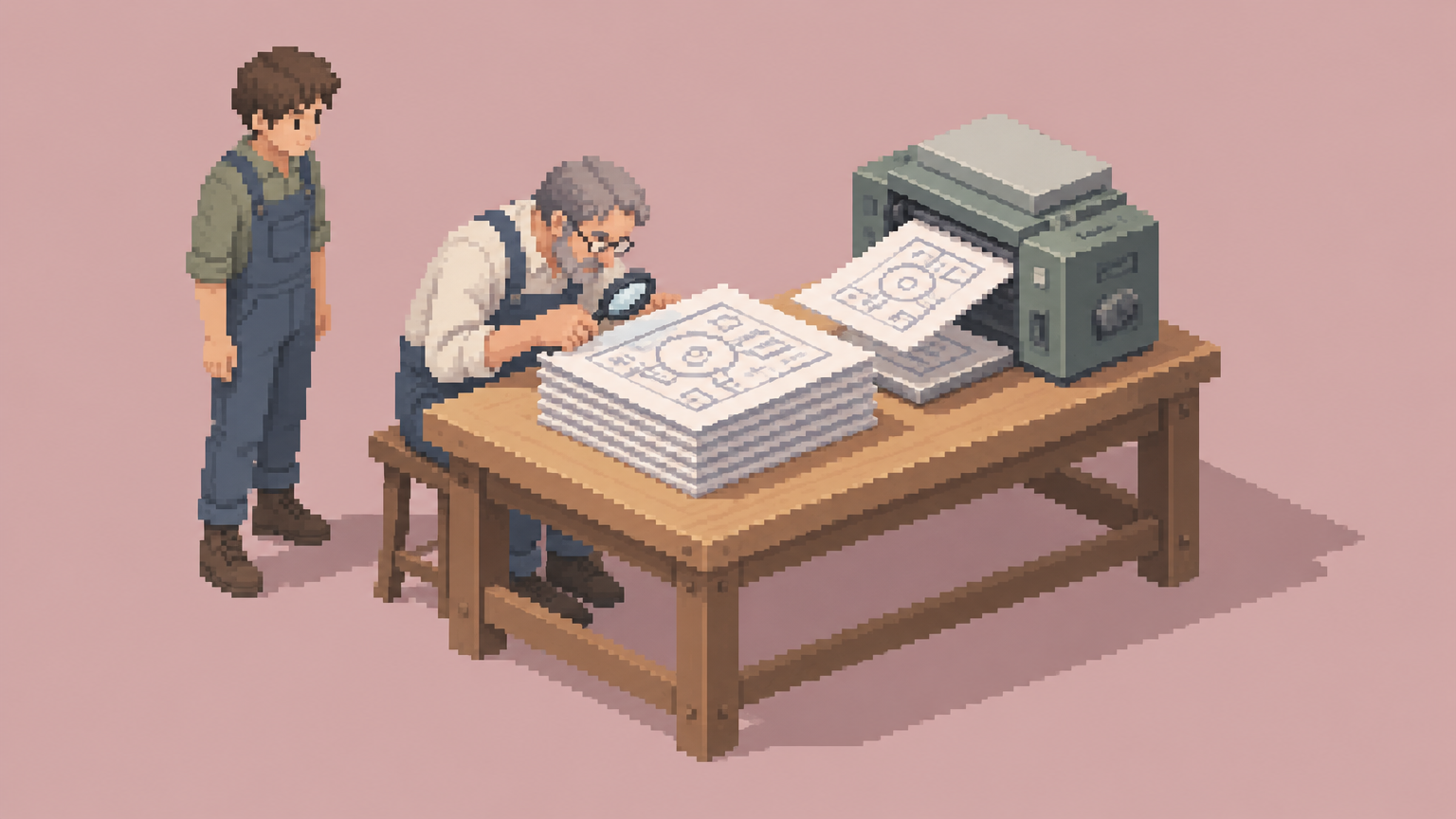
Four in ten Dutch STEM professionals see senior colleagues doing work that used to fall to juniors, because AI is replacing entry-level roles. More than half spend more time checking AI output than they did two years ago. The number of juniors being hired is not falling; rather, the work through which they learn the trade is shifting.
The figures come from the STEM Workforce Report 2026, which research firm YouGov carried out on behalf of SThree, a workforce consultancy in the STEM sector. YouGov surveyed 4,126 STEM professionals online in the United Kingdom, the United States, Germany, the Netherlands and Japan. Of these, 793 worked in the Netherlands. Fieldwork took place between 10 July and 1 September 2026.
The Netherlands above average
In the Netherlands, 40 per cent of respondents say senior staff are taking over work that previously fell to juniors. That is higher than in the other countries for which figures have been published. Only Germany comes close, at 35 per cent. In the United Kingdom the figure is 29 per cent, and in the United States 27 per cent.
More than half of Dutch professionals (51 per cent) also see a risk that growing dependence on technology such as AI will reduce the influx of juniors. That is the group that should eventually succeed today’s senior experts.
More time spent checking AI output
According to the research, 52 per cent of Dutch respondents spend more time checking work produced by AI than they did two years ago. Some 47 per cent spend more time adjusting or correcting it. This increase applies across the profession as a whole. SThree says it is mainly experienced specialists who take on the checking role, because they are able to judge whether AI output is correct.
No shrinking intake
The shift is not the result of reduced recruitment. More Dutch organisations report an increase in the number of juniors hired over the past year (42 per cent) than a decrease (12 per cent). Of the organisations that did hire fewer juniors, 32 per cent cite the disappearance of junior tasks due to AI as the reason. Some 36 per cent of that group say they have a greater need for specialists than for generalists.
SThree concludes from this that there is no shrinking pipeline of juniors, but rather a shift in the work itself. According to the company, tasks through which juniors would normally learn the trade are increasingly being carried out by AI. The assessment and checking of that output then ends up with senior professionals.
Learning opportunity disappears
Margot van Soest, managing director for the Netherlands and Spain at SThree, points out that when AI takes over junior work, a learning opportunity disappears too. In her view, juniors learn their trade precisely by doing this kind of work: they make mistakes, ask questions and build up experience under the guidance of senior staff. If checking AI output falls to those same seniors, they have less time left to mentor juniors.
Van Soest does not see AI and the development of technical talent as opposites. She advises organisations to rethink how juniors learn and develop, and to build targeted mentoring into their use of AI. According to Van Soest, this is necessary to ensure that enough experienced senior specialists are available in five to ten years’ time.
The full report is available via STEM Workforce Report 2026.
This article was originally published in Dutch on MSP Business. Read the original →